
Friendly Tegalrejo will entice you
Enjoy the culture and other features of Tegalrejo. This welcoming and romantic city entices travellers with its spas and bars. With a holiday rental, you get a home away from home – many rentals offer full kitchens and outdoor grills for some home cooking.
Sightseeing in and around Tegalrejo
Are you hoping to discover things to do in the area? Although it can be tempting to stay in your comfortable holiday rental, you'll want to check out everything that makes Tegalrejo a fun spot to go on holiday. These are some of the top attractions to explore, all within 30 miles (48.2 km) of the city centre:
- Gembira Loka Zoo (3.3 mi / 5.2 km)
- Jogja Bay (4.7 mi / 7.6 km)
- Kids Fun Park (6.6 mi / 10.7 km)
- Merapi Golf Course (12.6 mi / 20.2 km)
- Svargabumi Borobudur (15.6 mi / 25 km)
- Adisucipto Golf Course (5.4 mi / 8.7 km)
Exploring the natural landscape of Tegalrejo
Whether you're an adventurous traveller or just want to spend some time taking in the scenery, Tegalrejo is a great place to get out in nature. These are a few of the area's most enchanting features, all within 30 miles (48.2 km) of the city centre:
- Alun Alun Kidul (2.3 mi / 3.7 km)
- Svargabumi Borobudur (15.6 mi / 25 km)
- Lapangan Karang Kotagede (4 mi / 6.5 km)
- Tegaldowo Puspa Gading Park (6.5 mi / 10.4 km)
- Sri Gethuk Waterfall (14.6 mi / 23.4 km)
- Suroloyo Peak (15.1 mi / 24.4 km)
Transport options to and around Tegalrejo
The nearest airport is in Yogyakarta (JOG-Adisucipto Intl.), located 5.5 mi (8.8 km) from the city centre. If you can't find a flight that works for your travel itinerary, you can also fly into Yogyakarta (YIA-New Yogyakarta Intl.), which is 22 mi (35.3 km) away.
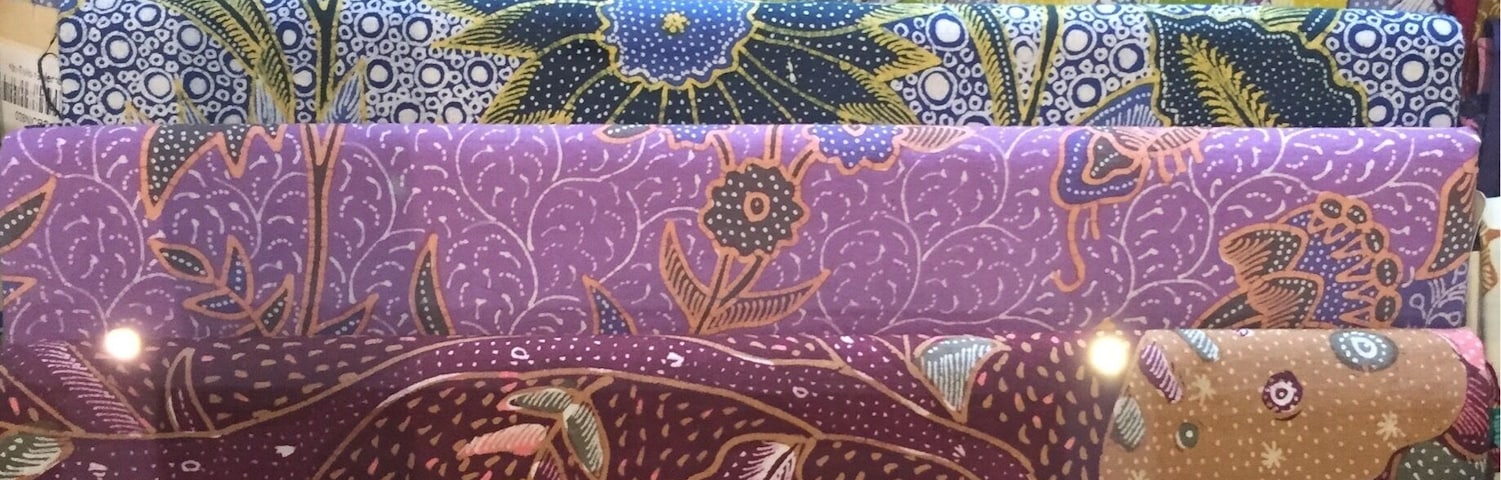
![Batik (Javanese pronunciation: [ˈbateʔ]; Indonesian: [ˈbatɪk]) is a technique of wax-resist dyeing applied to whole cloth, or cloth made using this technique. Batik is made either by drawing dots and lines of the resist with a spouted tool called a canting (IPA: [ʈ͡ʂantiŋ], also spelled tjanting), or by printing the resist with a copper stamp called a cap (IPA: [ʈ͡ʂap], also spelled tjap). The applied wax resists dyes and therefore allows the artisan to color selectively by soaking the cloth in one color, removing the wax with boiling water, and repeating if multiple colors are desired.
A tradition of making batik is found in various countries, including Nigeria, China, India, Malaysia, Philippines and Sri Lanka; the batik of Indonesia, however, is the most well-known. Indonesian batik made in the island of Java has a long history of acculturation, with diverse patterns influenced by a variety of cultures, and is the most developed in terms of pattern, technique, and the quality of workmanship. On October 2009, UNESCO designated Indonesian batik as a Masterpiece of Oral and Intangible Heritage of Humanity.
Source: Wikipedia
These batik clothes are sold at one of the high end hotel's gift shop in Yogyakarta. They are hand drawn and painted and hence command a high price! It ranges over US$200 although some cheap batik at the market can be found for a mere US$2. The difference lies in the quality, the design and also the amount of skill that's needed to make them.
Common batik wear are made from cotton. The ones shown here are silk and limited in quantity produced.
Yogyakarta and Surakata (Solo) are two cities where batik originated in Indonesia.
#unesco](https://images.trvl-media.com/place/1718/09cd56ac-2be9-4518-ac77-e217d037b46b.jpg?impolicy=fcrop&w=1920&h=480&q=medium)
