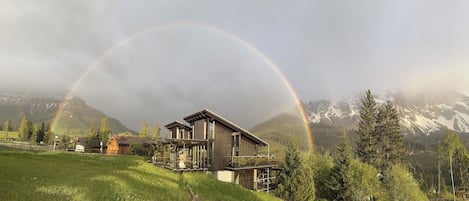
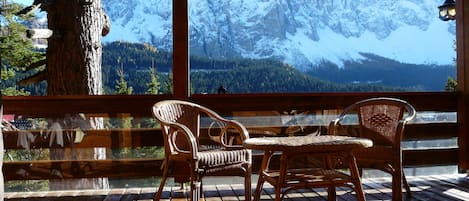
Ciasa Soldà, an ancient 16th-century house whose historic murals on the ground floor depict the adventures of “Silvestro Soldà” in the wars against the Turks, is nestled on 3,000 square metres of meadow near the parish church of St. John, in a quiet, sunny area with panoramic views of Cima Dodici, the Latemar, and the Catinaccio (a UNESCO World Heritage Site), just a short walk from the village centre—a 5-minute walk away. A supermarket, shops, a bakery, a bank, a post office, and the bus stop are just a short walk away.<br><br><br>Apartment suitable for 8–12 people (147 m²) - 4 gentians (Highest certification in Trentino)<br>Fully equipped with every comfort, featuring a kitchen (dishwasher and microwave), two bathrooms, four bedrooms, and a lovely living room (with a sofa bed), TV, Wi-Fi, and a balcony.<br><br>The rental price includes:<br><br>• Heating and electricity costs<br>• Private parking <br><br><br><br>All apartments feature:<br><br>• Dishes and silverware<br>• Refrigerator, dishwasher, washing machine, microwave, blender, toaster<br>• 40-inch Smart TV<br>• Wi-Fi<br>• Val di Fassa ski bus stop 200 metres away<br>• Bedding and towels<br>• Cots available upon request<br><br><br><br>In addition, we offer our guests a privilege card that entitles you to:<br><br>• 20% off ski and equipment rentals at Sport Edy in Vigo, near the Ciampedie cable car station (ask for Edoardo);<br>• 10% discount at the Vigo Pharmacy on over-the-counter products<br> (ask for Ivana);<br>• Dinner for €20.00, including a first course, main course, side dish, fruit or dessert, coffee, and liqueur at Hotel Latemar (380 metres from Ciasa Soldà), by reservation only (ask for Tita);<br>• A special offer for those seeking the thrill of a delicious lunch and a snowmobile ride to Rifugio Fuchiade (Passo San Pellegrino – Moena), featuring premium menus priced at 40, 50, and 55 €uro (ask for Manuela);<br>• At the Garnì Enrosadira (350 m from Ciasa Sodlà), you can enjoy the wellness centre.<br><br><br>HISTORY “The storey of Silvestro Soldà was collected and published at a time when the strangeness of certain events threatened to relegate it to the realm of legends, even though, taken as a whole, it still appeared to be a historical account. According to local tradition, the adventurer, after amassing a fortune in the wars against the Turks, returned to Vigo di Fassa, his native village: where, having purchased a house in 1533, he had restored and embellished it by having the Sultan’s menagerie painted on its walls. It is also said that, when the local people one day collected metal to cast a new bell, Soldà’s wife—while he was away—contributed, whether out of ignorance, holy zeal, or both, a priceless solid silver object that her husband had jealously guarded as the crown jewel of his spoils. This irreparable loss would have driven him, in a fit of rage, to kill his wife, had he not been persuaded—through the intervention of others—that his silver would ensure a successful casting: and in fact, the sound of the bell—which had been cast to perfection—resounded so pure that the Soldà, proud to take credit for it and delighted to have given his fellow villagers an enduring memento of himself, willingly forgave his wife. The narrative retains all the hallmarks of a true storey; and, moreover, there is no shortage of evidence.” (From “Studi Trentini di scienze storiche—Year 1934”—Nicolò Rasmo) “Reverse Hunt,” ground-floor atrium, southwest wall. Date: 16th century, second half. Artist: David Solbach (?). Half-fresco painting. The entire floor depicts allegorical scenes of hunting in reverse: an ox disembowels a bear, a hen pecks at a fox, a sheep mauls a wolf, two ha